
Insights & Wellness
Discover articles, tips, and real stories that inspire health, vitality, and balance.
💨 Oxygen is life — but ozone takes it further.
With 15+ years of experience and 1,300+ patients treated, Ozone 369 leads the way in safe, evidence-based ozone therapy.
From boosting oxygen efficiency to modulating the immune system, ozone therapy helps restore balance from the inside out.
⚡ Curious how it works?
👉 Dive into our latest blog and discover why ozone is one of the most trusted integrative therapies today.
AUTOVACCINES THAT HEAL
AUTOVACCINES THAT HEAL
The Immune System as the Key Player in Healing
For decades, science has pursued the development of vaccines capable not only of preventing diseases but also of treating and even curing them, including immune disorders and cancer. Traditionally, vaccines have been classified into two major groups: preventive (conventional) vaccines and therapeutic vaccines.
Conventional vaccines are administered to healthy individuals with the goal of preventing infectious diseases caused by viruses, bacteria, or toxins. Their purpose is to train the immune system so that when the body encounters a pathogen, it can recognize and defend against it effectively. For this reason, these vaccines are used as a preventive measure in healthy individuals.
Therapeutic vaccines, on the other hand, are designed for people who already have a disease. Their goal is not prevention, but rather to stimulate and modulate the immune system so it can act against altered cells, such as those found in cancer or immune-related diseases.
Pioneers of Therapeutic Vaccines
One of the most important pioneers in this field was Dr. Jacinto Convit, a Venezuelan scientist internationally recognized for his work in the treatment of diseases such as leprosy and leishmaniasis. Thanks to the development of a vaccine against leprosy, he received multiple international recognitions and was nominated for the Nobel Prize in Medicine in 1988.
Years later, Dr. Convit once again impacted the scientific community when he announced the development of autologous vaccines against cancer, specifically for colon, stomach, and breast cancer. His approach involved using cells from the patient’s own tumor to teach the immune system to recognize and destroy them.
In simple terms, these autovaccines aim to educate the immune system to identify and eliminate malignant cells, reducing the risk of recurrence associated with residual genetic mutations.
Contemporary Advances in Personalized Cancer Vaccines
In recent years, another outstanding Venezuelan scientist, Dr. Beatriz M. Carreño, has made significant contributions to the development of personalized therapeutic vaccines for cancer.
Dr. Carreño is an immunologist and researcher at prestigious academic institutions in the United States. Her work focuses on activating and directing the immune system’s response specifically against tumors.
Her research centers on tumor neoantigens — proteins that arise from mutations in cancer cells — and how these can be used to design individualized vaccines capable of activating the patient’s own T lymphocytes. Once activated, these immune cells recognize and selectively attack malignant cells while sparing healthy tissue.
Dr. Carreño has led and participated in clinical studies involving patients with melanoma and other types of cancer, demonstrating that it is possible to induce a strong, specific, and sustained immune response through personalized therapeutic vaccines.
Her work has provided solid evidence that the immune system can be trained to fight cancer in a targeted way, opening the door to a new era of personalized immunotherapy with greater precision and fewer side effects than conventional treatments.
International Development of Therapeutic Vaccines
In Europe, particularly in Germany, therapeutic vaccines such as InMucin (Vaxil Bio Therapeutics) have been developed. This vaccine is based on the MUC1 protein, which is present in approximately 90% of cancer cells.
The goal of this vaccine is to stimulate T lymphocytes to recognize and destroy these cells. It has shown potential for treating more than ten different types of cancer. Although many of these vaccines are still in clinical research phases, the results obtained so far are promising and have generated growing optimism within the scientific community.
The Ozone Autovaccine in Bioregulatory Medicine
Within the approach of Bioregulatory Medicine and Biohacking, the Ozone Autovaccine (also known as minor autohemotherapy) has demonstrated significant potential in activating and modulating the immune system.
It has been scientifically demonstrated that medical ozone acts as an immunomodulator, promoting the synthesis and release of cytokines — both immunostimulatory and immunosuppressive — through the activation of monocytes and T lymphocytes.
When ozone comes into contact with blood, it generates biological secondary messengers known as ozonides, which stimulate the production of proteins and cytokines responsible for regulating the immune system.
Therapeutic and Preventive Indications
The Ozone Autovaccine is considered a therapeutic vaccine when used as a complementary treatment for:
Autoimmune diseases (lupus, rheumatoid arthritis, psoriasis, fibromyalgia, among others)
Allergies and bronchial asthma
Cancer
Diseases associated with immune suppression or immune overactivation
It can also act as a preventive therapy when applied in cycles and sessions in healthy individuals in order to:
Strengthen and modulate the immune system in the long term
Reduce the risk of viral and bacterial infections
Contribute to the prevention of chronic and degenerative diseases, including cancer
Procedure and Safety
The Ozone Autovaccine is a simple, safe, and well-tolerated procedure that presents no medical contraindications when performed correctly.
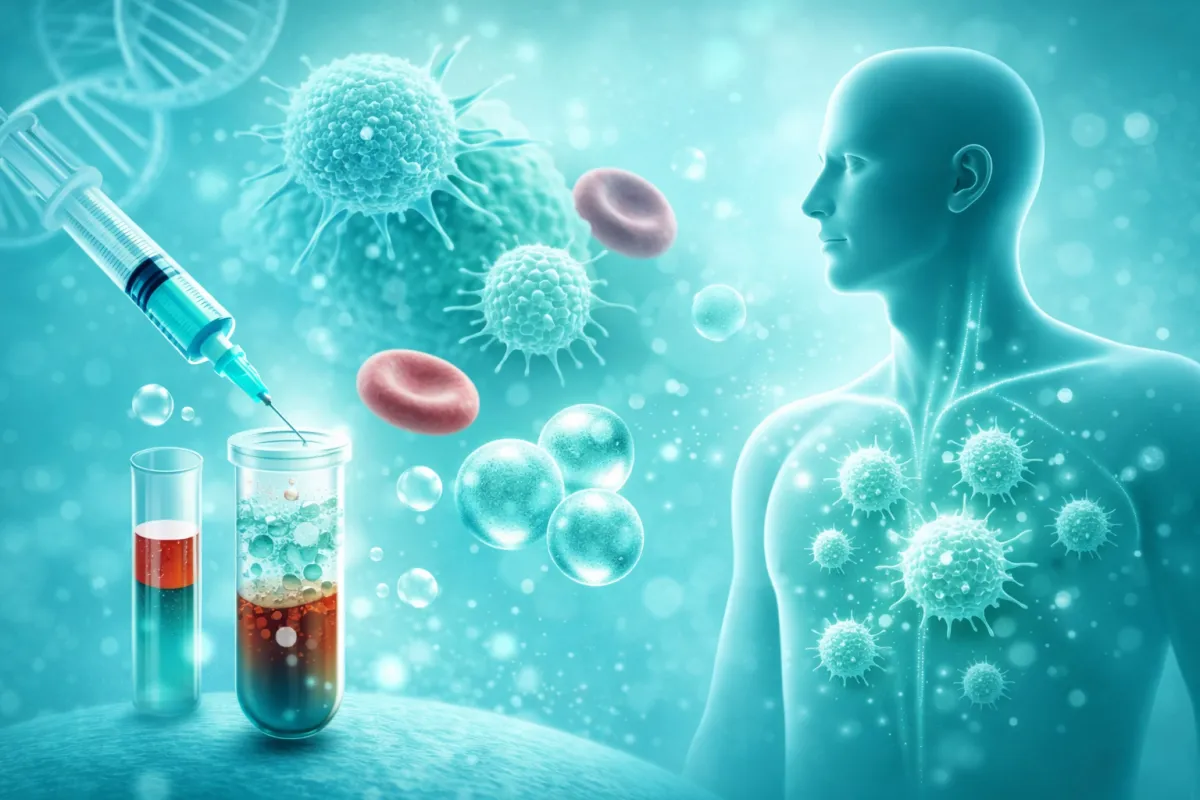
The procedure consists of extracting approximately 5 ml of blood, which is then exposed to medical ozone and subsequently administered through a deep intramuscular injection.
This procedure must always be performed in a specialized healthcare center by properly trained medical personnel.
Clinical Experience
The clinical scope of ozone therapy continues to expand, with preventive and therapeutic indications in more than 250 diseases, according to the Madrid Declaration of the International Scientific Committee for Ozone Therapy (ISCO3).
In our clinical experience, we have observed highly positive results in patients with:
Cancer (before, during, and after surgery, chemotherapy, and/or radiotherapy)
Autoimmune diseases
Allergies and asthma
Acute and post-viral infections (Chikungunya, Zika, Dengue)
Additionally, the combination of Ozone Autovaccine therapy and intravenous nutrient therapy has shown significant clinical improvement in patients with HIV and chronic viral infections such as HPV, herpes simplex, herpes zoster, viral hepatitis, and cytomegalovirus, among others.